
Blogs/Pachanga editorial
Why Pool Coping & Tile Matter: Choosing the Right Materials for Your Texas Hill Country Pool
By Pachanga Pools · September 2026
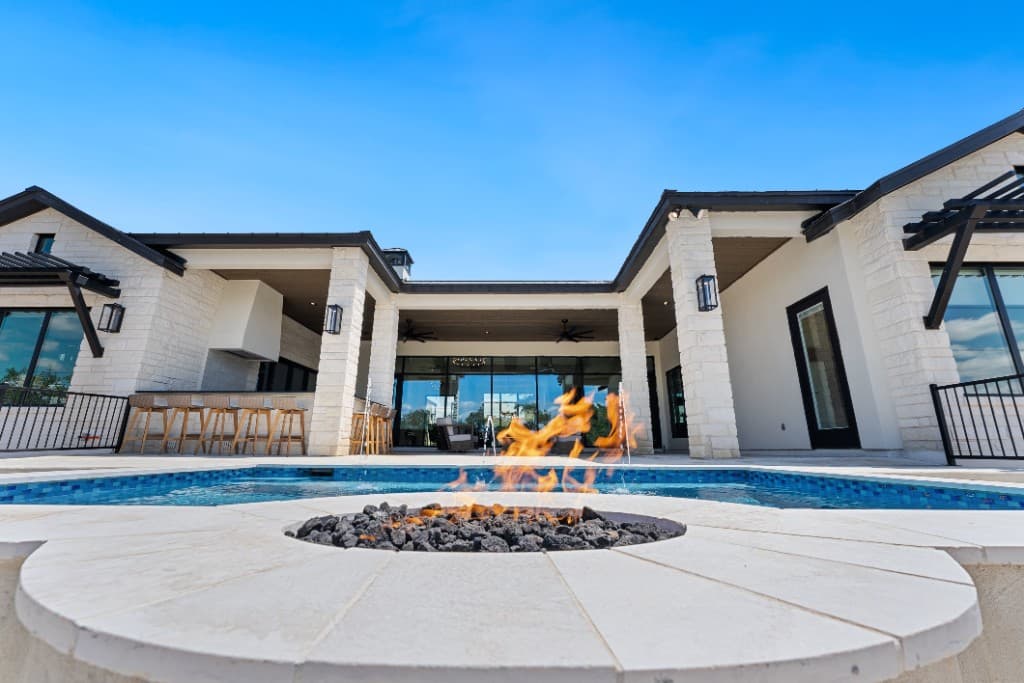
When designing a custom pool, it is easy to focus on the big decisions—the pool shape, finish, water features, lighting, and outdoor living space. But some of the most important choices are the details that frame the pool itself.
Pool coping and tile play an important role in the appearance, durability, maintenance, and long-term performance of your pool.
In the Texas Hill Country, those choices deserve even more consideration. Our climate, exposure to intense sun, temperature changes, and the mineral content found in many local water sources can all influence how pool materials perform over time.
At Pachanga Pools, we believe the best pool design is one that looks beautiful on day one and continues to perform beautifully for years to come. That starts with selecting materials that are appropriate for the environment—not simply materials that look good in a showroom.
What Is Pool Coping?
Pool coping is the material installed along the top edge of the pool. It creates the transition between the pool shell and the surrounding deck or patio.
Beyond its visual role, coping helps define the edge of the pool and provides an important finished surface around the water.
Coping can be made from a variety of materials, including:
- Natural stone
- Concrete
- Porcelain
- Precast materials
- Other engineered or manufactured stone products
The right choice depends on the architecture of the home, the surrounding landscape, the pool design, how the space will be used, and the specific characteristics of the material.
What Is Pool Tile?
Pool tile is most commonly used along the waterline, although tile can also be incorporated throughout the pool, including on steps, raised walls, tanning ledges, water features, and other architectural details.
Tile does more than create a decorative accent. It provides a finished, cleanable surface at one of the areas of the pool most exposed to water, chemicals, and mineral deposits.
That makes the material, installation method, grout, and overall water chemistry important considerations.
Why Texas Hill Country Conditions Matter
Hard Water Can Affect Pool Materials
Water hardness is an important consideration when selecting pool materials.
The Texas Water Development Board notes that groundwater from karst limestone aquifers is typically hard because calcium and magnesium are dissolved from the surrounding rock. The Texas Hill Country is heavily influenced by limestone geology, and many groundwater sources in the region are hard or very hard.
That matters because calcium and other dissolved minerals can contribute to scale formation.
Scale can become noticeable around the waterline, on tile, and on pool equipment when water chemistry is not properly managed. Choosing materials that are appropriate for the environment—and maintaining proper water chemistry—can help protect the appearance of the finished pool.
For homeowners in New Braunfels and the surrounding Hill Country, understanding the water source is an important part of the pool design conversation.
Texas Heat and Sun Matter, Too
Texas summers can be demanding on outdoor materials.
Pool coping and surrounding surfaces are exposed to direct sunlight, heat, moisture, pool chemicals, foot traffic, and repeated changes in temperature. Materials can expand and contract as temperatures and moisture conditions change.
That is one reason proper installation is just as important as material selection.
Tile-industry guidance emphasizes the importance of movement joints because tile assemblies and their substrates can expand and contract differently with changes in temperature and moisture. Without appropriate accommodation for movement, stresses can contribute to cracking, grout failure, or tile delamination.
In other words, choosing a beautiful tile is only part of the equation.
The material, setting system, substrate, joints, grout, and installation all need to work together.
How Should You Choose Pool Coping?
There is no single coping material that is right for every Texas Hill Country pool.
Instead, we recommend considering several factors.
Look at the Architecture of Your Home
Your pool should feel connected to the home—not like an addition that was designed separately.
Natural stone pool coping in Texas may complement a Hill Country or transitional home beautifully. A refined porcelain or manufactured option may be better suited to a contemporary design.
The goal is to create continuity between the home's architecture, landscaping, patio, and pool.
Consider Heat and Barefoot Comfort
Coping is a surface people regularly walk across barefoot.
The color, texture, finish, and material can all affect how the surface performs in direct Texas sun.
A material that looks beautiful in a sample room may behave very differently when installed outdoors in full sun.
This is one reason we encourage homeowners to evaluate actual samples in the environment where they will be used—not just under showroom lighting.
Consider Slip Resistance and Texture
Pool areas are wet by nature.
The appropriate surface should provide a reasonable level of traction for its intended use while still fitting the aesthetic of the home.
There is not one universal slip-resistance specification that automatically determines the right pool-deck tile for every residential application. The National Tile Contractors Association notes that the specific tile type, finish, size, grout joints, setting materials, and installation conditions should all be considered for the intended application.
Think About Maintenance
A pool is meant to be enjoyed—not constantly scrubbed.
Some materials and finishes are more forgiving of waterline deposits, outdoor exposure, and everyday use than others.
Your tile and coping selections should therefore be considered alongside your expected maintenance routine and your pool's water chemistry.
How Should You Choose Pool Tile?
Pool tile offers an opportunity to add personality to the design, but it should still be selected with performance in mind.
Waterline Tile
Waterline tile is particularly important because it sits at the transition between the water and the surrounding environment.
This area can be exposed to:
- Calcium and mineral deposits
- Changes in water level
- Pool chemicals
- Sun exposure
- Cleaning
- Temperature fluctuations
A tile that is attractive but difficult to maintain may become frustrating over time.
Glass, Porcelain, Ceramic, or Natural Stone?
Different tile materials can create very different looks and performance characteristics.
Glass tile can create beautiful reflections and visual depth, particularly when used for water features or accent areas.
Porcelain tile offers a wide range of colors, textures, sizes, and styles and can provide a clean, architectural look.
Ceramic tile can offer another versatile option depending on the specific product and application.
Natural stone can bring warmth and organic character that works particularly well with Hill Country architecture and landscaping.
The important point is that the product should be selected for its specific intended pool application, not simply because it is attractive.
Don't Overlook the Installation
One of the biggest mistakes homeowners can make is thinking that the material itself is the entire decision.
It isn't.
A high-quality tile can still fail if it is installed incorrectly.
Tile installation guidance emphasizes proper coverage, appropriate setting materials, and movement accommodation. Outdoor and pool installations can be particularly sensitive to these details because of moisture, temperature changes, and exposure.
The transition between the coping, pool tile, deck, and pool structure also needs to be properly detailed.
For example, industry guidance for pool installations calls for movement provisions between coping and adjacent surfaces to accommodate movement within the assembly.
At Pachanga Pools, we look at these details as part of the complete pool system—not as an afterthought.
Coping and Tile Should Work Together
One of our favorite ways to approach pool design is to think of the coping and tile as one visual composition.
They don't necessarily need to match.
In fact, some of the most sophisticated pool designs use contrast:
- A warm natural stone coping with understated porcelain tile
- A clean contemporary coping with a subtle glass waterline
- A light limestone-inspired coping paired with a darker waterline tile
- A neutral coping with a decorative tile used selectively at water features
The goal is balance.
Your pool tile should complement the coping, while both should connect naturally to the architecture and landscape surrounding the pool.
What About Saltwater Pools?
Your choice of pool sanitization system can also be part of the material conversation.
Saltwater pools use a salt chlorine generator to produce chlorine from dissolved salt. While saltwater systems can be a good option for some homeowners, salt introduces additional considerations for certain metals and materials.
For example, manufacturer guidance for exterior tile profiles notes that swimming-pool chemical exposure can influence material selection and that higher-corrosion-resistant stainless steel may be appropriate for certain applications involving chlorine, chloride, or saltwater exposure.
This doesn't mean saltwater pools are inherently bad for materials. It means the entire pool system—including finishes and surrounding components—should be considered together.
That is one reason we believe material selection should happen as part of the overall pool design process rather than as a last-minute finish decision.
What Makes a Good Texas Hill Country Pool Material?
Rather than looking for a single "best" material, we recommend looking for materials that are appropriate for your specific project.
A good selection should balance:
- Aesthetics — Does it complement your home and landscape?
- Durability — Is it appropriate for an outdoor pool environment?
- Heat and sun exposure — Will it perform well in the Texas climate?
- Water chemistry — Is it appropriate for the pool's water conditions and maintenance program?
- Maintenance — Will it be practical to clean and care for?
- Safety and comfort — Is the texture and finish appropriate for how the surface will be used?
- Installation — Can it be installed correctly with the appropriate setting materials, joints, and detailing?
- Longevity — Will you still love the material—and will it still perform—years from now?
Why We Spend So Much Time on the Details
A custom pool should be more than beautiful in a photograph.
It should feel natural next to the home. It should be comfortable to use. The materials should make sense for the environment. And the details should be considered before construction begins—not after a problem appears.
That's why coping and tile selection are such an important part of the design process at Pachanga Pools.
We don't believe in choosing materials simply because they are trending or because they look good in a sample.
We look at the entire environment, from the Texas Hill Country climate and water conditions to your home's architecture, landscape, lifestyle, and long-term maintenance expectations.
The result is a pool that isn't just designed to look beautiful today.
It's designed to belong here.
Building a Pool in the Texas Hill Country?
If you're considering a custom pool in New Braunfels, Canyon Lake, Boerne, or throughout the Texas Hill Country, we'd love to help you understand the material choices before construction begins.
From coping and waterline tile to finishes, lighting, water features, and the surrounding outdoor living space, every detail contributes to the finished experience.
Pachanga Pools — thoughtfully designed. Built for the Hill Country.
Frequently Asked Questions
What is the best coping material for a Texas Hill Country pool?
There is no single best material for every pool. Natural stone, porcelain, concrete, and manufactured coping can all be appropriate depending on the home's architecture, exposure, maintenance expectations, and specific product characteristics.
Why is pool tile important?
Pool tile provides a finished surface, particularly around the waterline, and must withstand moisture, pool chemicals, temperature changes, and mineral exposure. The right tile can also play an important role in the overall design of the pool.
Does Texas Hill Country water affect pool tile?
It can. Many groundwater sources associated with limestone aquifers are hard because they contain dissolved calcium and magnesium. Hard water can contribute to mineral scale, making proper water chemistry and material selection particularly important.
Can natural stone be used for pool coping?
Yes. Natural stone can be an excellent option when the specific stone, finish, installation method, and application are appropriate for the project.
Why are movement joints important around pool tile?
Tile, mortar, and the underlying structure can expand and contract at different rates as temperature and moisture change. Properly designed movement joints help accommodate those movements and reduce stresses that can lead to cracking or tile failure.
Ready to plan a Hill Country pool?
Tell us about your backyard and we'll help you choose the sanitation system that fits the property.
Sources & Further Reading
- Texas Water Development Board (TWDB) — Texas Well Owner Network: Well Owner’s Guide to Water Supply
Explains how karst limestone aquifers typically produce hard groundwater as calcium and magnesium dissolve from the rock.
- Texas Water Development Board — Evaluation of the Ground-Water Resources of the Paleozoic and Cretaceous Aquifers in the Hill Country of Central Texas
Documents hardness and mineral character of groundwater analyzed in the Hill Country of Central Texas.
- Texas Water Development Board — Trinity Aquifer
Regional overview of the Trinity Aquifer in Central Texas, including generally hard water in the aquifer outcrop.
- National Tile Contractors Association / TileLetter — Tiling Pools
Discusses pool coping types, the tile/coping interface, and movement provisions between pool components.
- National Tile Contractors Association / TileLetter — Ensuring Value with Pool Tile
Covers substrate prep, mortar coverage, setting materials, expansion joints, and grout for submerged tile.
- TileLetter — DCOF on a Pool Deck
Notes that there is no single DCOF specification for every pool deck; tile, finish, joints, and installation should be evaluated together.
- Schluter Systems — Movement Joints
Explains why movement joints are integral to tile assemblies so thermal and moisture movement does not damage the system.
- Schluter Systems — Movement Joints and Cove-Shaped Profiles
Addresses chemical exposure in swimming-pool applications, including higher-grade stainless steel for chlorine, chloride, or saltwater conditions.